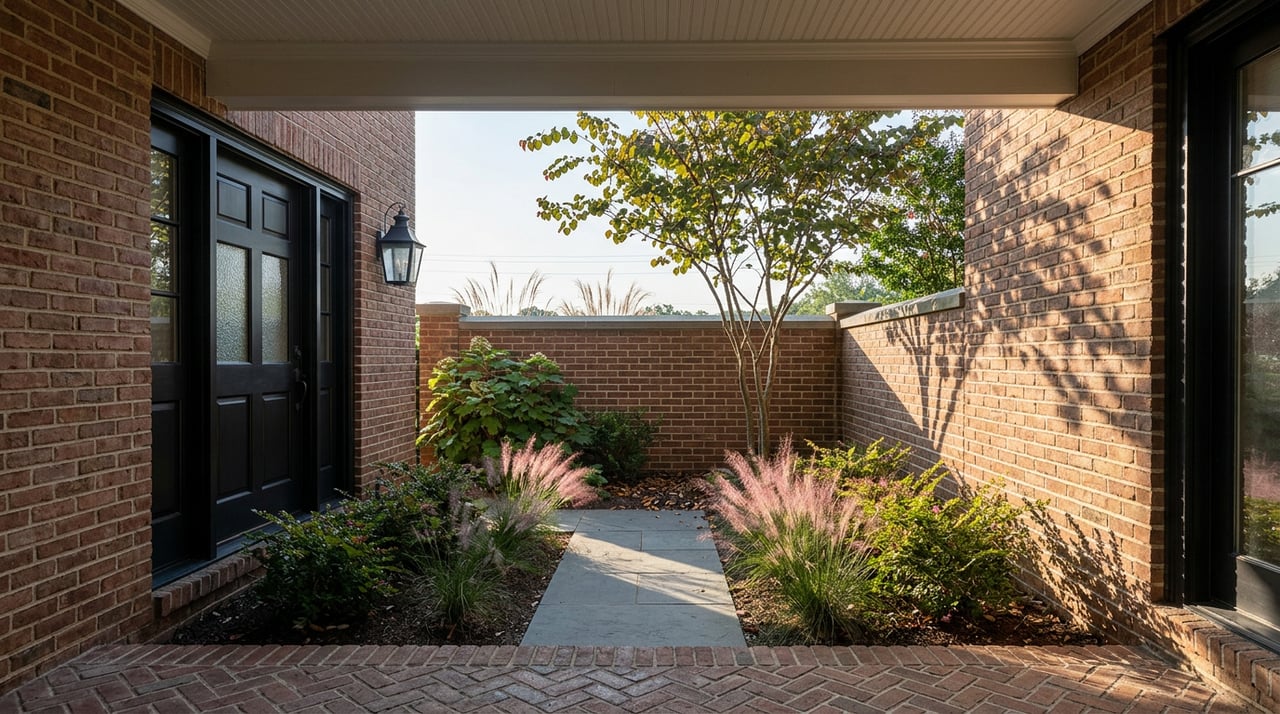
Walk south on 21st Avenue past the Belcourt Theatre's marquee, cut over to Acklen Avenue, and you land at the pool gate of a 19-room hotel that didn't exist a year ago. Keep walking north on West End itself and you pass a grocery store site that a developer wants to turn into fifteen floors of hotel, apartments, and retail. All three of those things are true right now, within a few blocks of each other, in the same stretch of Nashville that residents just call the Village or West End depending on which end of it they mean.
That's the thing worth sitting with this fall. Hillsboro Village spent its centennial year proving how small it could stay. West End Avenue, a few blocks over, is being pitched as something that needs fifteen stories to work. Both are happening in 2026. Neither one is waiting on the other.
The Village's Own Birthday
The Belcourt opened its doors on May 18, 1925, as the Hillsboro Theatre, with its original entrance on 21st Avenue where the Villager Tavern sits today. For seven months in the mid-1930s, the Grand Ole Opry broadcast from that same stage before it outgrew the room and moved on to bigger venues. The theater nearly didn't survive its own history. It came close to disappearing in 1999 before a grassroots effort saved the building, and it reopened as a nonprofit on June 3, 2000, the version of the Belcourt that's been running double features and 35mm prints ever since.
The centennial celebration, branded Belcourt 100, kicked off in the spring of 2025 with three screenings of Robert Altman's NASHVILLE and an in-person appearance from actor Keith Carradine, who wrote and performed the film's Oscar-winning song. From there, the theater's staff historian, Teddy Minton, spent the following months digging through the Country Music Hall of Fame's archives, Metro Archives, the New York Public Library, and the University of Wisconsin's film research collection to build out a slate of quarterly seminars on the building's past. That September, Metro Council and the Tennessee Historical Commission added a historical marker out front. The full twelve-month celebration wrapped this past spring with an exhibit of a hand-built miniature replica of the pre-renovation theater by artist Devin Drake, commissioned by Vanderbilt film scholar Claire Sisco King.
None of that required a new building. It required a hundred years of the same one.
A Block Away, a Hotel Chose to Stay Small
In January, The Chloe Nashville opened at 1906 Acklen Ave, tucked into two restored 1920s Craftsman cottages that once served as the offices of Asylum Records and Spirit Music, addresses tied to songs written or recorded by Joni Mitchell, Bob Dylan, Chris Stapleton, and George Jones. It's the first Tennessee project from Róbert LeBlanc and his New Orleans hospitality group, LeBlanc + Smith, whose original Chloe on St. Charles Avenue opened in 2020.
The Nashville version has 19 rooms. That's the whole hotel. A restaurant led by chef Matt Regan, who came up through Sylvain, Emeril's, and Luke in New Orleans, anchors the ground floor, alongside a bar program from Jason Sorbet of Barrel Proof Nashville built around Tennessee whiskey. The pool sits open to the public on day passes and seasonal memberships, not just hotel guests, which is its own quiet decision: a boutique hotel that wants the neighborhood inside its gate rather than keeping it at arm's length.
"You're near the party but not in the party."
That's how LeBlanc has described the calculation behind picking Hillsboro Village over a downtown address. It's also a fair description of what nineteen rooms built into two old houses gets you that a tower doesn't.
The Math a Few Blocks North
Compare that to what's on the table for the corridor itself. In July, plans emerged for a fifteen-floor tower on the site of a former Piggly Wiggly grocery along West End Avenue, combining hotel, residential, and retail space in a single structure. It's the kind of scale nobody is proposing for the Village's own footprint, where the tallest thing on the block is still the Belcourt's marquee.
| Scale | 2026 milestone | |
|---|---|---|
| Belcourt Theatre | 1 screen, opened 1925 | Closed out its centennial year this spring |
| The Chloe Nashville | 19 rooms, 2 renovated cottages | Opened January 2026 |
| Proposed West End tower | 15 floors | Plans emerged July 2026 |
Same neighborhood, same year, two different answers to the question of what growth looks like here.
What's Actually New to Eat and Drink
The Village's restaurant turnover this year has followed the same small-footprint logic as the Belcourt and the Chloe. Two openings worth knowing about if you haven't been down 21st Avenue lately:
- NoWhere Special opened in July, a lounge and restaurant built by Tennessee State University grads leaning into elevated comfort food. Two months in, it's carrying a 4.8 rating on Google, which is a fast climb for a room that new.
- Little Hats Market opened its third Nashville location in the Village this summer, joining sibling shops in Germantown and Cool Springs, with gourmet sandwiches, soups, salads, and house-made pasta.
Neither one replaced anything. They filled in around fixtures that were already there. The Pancake Pantry has been running its scratch-made pancake line since 1961 and shows no sign of slowing down. A few doors down, Twenty First Nashville has spent the past couple of years inside the old KayBob's Grill and Ale and H-Cues Upstairs Pool Room building, proof that even the restaurant turnover here tends to reuse a shell rather than clear the lot.
The Fall Calendar, Now That the Centennial Is Behind It
With Belcourt 100 wrapped, the theater's current fall lineup has shifted to its Strong Leads Fall 2026 series, alongside standing programs like Films Forever, its field trip series for high school students, and Lights, Camera, Nashville!, a walking tour built around films shot around the city. It's less centennial spectacle, more the theater doing what it's done for a hundred years: picking films first and letting the box office follow.
At The Chloe, the pool that carried the hotel through its debut summer is giving ground to fall programming indoors, including the Artists in Residence series and a Songwriter Series built around live sets in the bar. Same building, different season, same idea that the neighborhood should have a reason to walk in even when it's not July.
What This Actually Means If You Live Here
None of this requires you to do anything. That's rather the point of writing it down. If you live in Hillsboro Village or along West End, you're currently watching two competing theories of growth play out within a ten-minute walk of each other. One theory says the neighborhood's value is in staying exactly the size it's always been, a single-screen theater, a nineteen-room hotel built into houses that used to record songs instead of sell dinners. The other says the corridor itself, the traffic-heavy stretch of West End proper, has room for towers.
Both can be true at once without contradicting each other. The Village keeps being the Village. The avenue keeps being the avenue. What changes year to year is which one gets the headline, and this year, the headline belonged to the hundred-year-old theater and the nineteen-room hotel that opened a few blocks from it, not the fifteen-story proposal still working its way through approvals.
If you're weighing what any of this means for a property here, whether you're watching from the sidelines or thinking seriously about a move, Heather Hamel works this market block by block, not just by the numbers on a portal. Begin a private consultation when you're ready to talk specifics.


